

Even though some sources from medieval Islamic time attribute the building of the town to a Muslim Arab ruler, modern historians believe that the fact that the name Ganja derives from the New Persian ganj ("treasure") and in Arabic source the name is recorded as Janza (from the Middle Persian ganza) suggests that the city existed in pre-Islamic times and was likely founded in the 5th century.The area in which Ganja is located was known as Arran from the 9th to 12th century; its urban population spoke mainly in the Persian language.
According to medieval Arabic sources, the city of Ganja was founded in 859-60 by Muhammad ibn Khalid ibn Yazid ibn Mazyad, the Arab governor of the region in the reign of the caliph al-Mutawakkil, and so-called because of a treasure unearthed there. According to the legend, the Arab governor had a dream where a voice told him that there was a treasure hidden under one of the three hills around the area where he camped. The voice told him to unearth it and use the money to found a city. He did so and informed the caliph about the money and the city. Caliph made Muhammad the hereditary governor of the city on a condition that he would give the money he found to the caliph.
Foundation of the city by Arabs is confirmed by the medieval Armenian historian Movses Kagankatvatsi, who mentions that the city of Ganja was founded in 846-47 in the canton of Arshakashen by the son of Khazr Patgos, "a furious and merciless man".
Historically an important city of the South Caucasus, Ganja has been part of the Sassanid empire, Great Seljuk Empire, Kingdom of Georgia, Atabegs of Azerbaijan, Khwarezmid Empire, Il-Khans,Timurids,Qara Qoyunlu,Ak Koyunlu,the Safavid, the Afsharid, the Zand and the Qajarempires of Persia/Iran. Prior to the Iranian Zand and Qajar rule, following Nader Shah's death, it was ruled locally for a few decades by the khans/dukes of the Ganja Khanate, who themselves were subordinate to the central rule in mainland Iran and were a branch of the Iranian Qajar family.Ganja is also the birthplace of the famous poet Nizami Ganjavi.
-Nizami's mouseleum The Nizami Mausoleum (Azerbaijani: Nizami m?qb?r?si), built in honor of the 12th-century poet Nizami Ganjavi, stands just outside the city of Ganja, Azerbaijan. The mausoleum was originally built in 1947 in place of an old collapsed mausoleum, and rebuilt in its present form in 1991.It is a tall cylindrical building, surrounded by gardens. To one side, there are metal statues commemorating Nizami's epic poems. The mausoleum was constructed from solid granite blocks, delivered from the Ukraine. Farman Imamguliyev was the architect; the statues were created by sculptor Gorkhmaz Sudjaddinov.
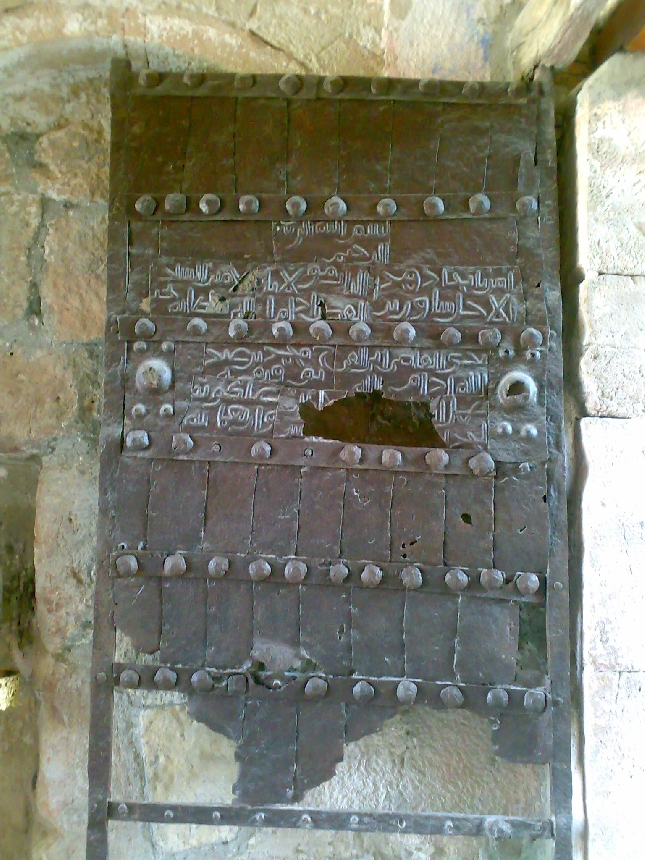
-Doors of Ganja
-Shah Abbas mosque
-Bottle House (Azerbaijani: Butulka ev/Butulkali ev) is an unusual private residence in Ganja built from glass bottles.Two-storey bottle house was built by Ibrahim Jafarov, a resident of Ganja in 1966-67 from glass bottles of different shapes and sizes, and colorful stones brought from Sochi.48000 bottles was used in construction.The construction of this house was dedicated to the memory of Ibrahim Jafarov's brother who went missing during World War II.
автор: русский гид Fuad Babayev

написать гиду

 ваше сообщение отправлено